Something Real to Fear?
The New York Fed’s Household Credit and Delinquency report was just released. What we’ve been hearing is that credit card and auto debt defaults and delinquencies were surging; we’ve been hearing that for a year or more. But it didn’t really affect credit availability much, for one reason: banks were prepared for mortgage and Home Equity Revolving Line of Credit (HELOC) defaults and had set aside hundreds of billions of dollars collectively to deal with them. And up until now, the fear of mortgage and HELOC defaults was just that, a fear. They weren’t a reality. And since so much of that cash continued to sit in reserve, banks could keep lending without much trepidation.
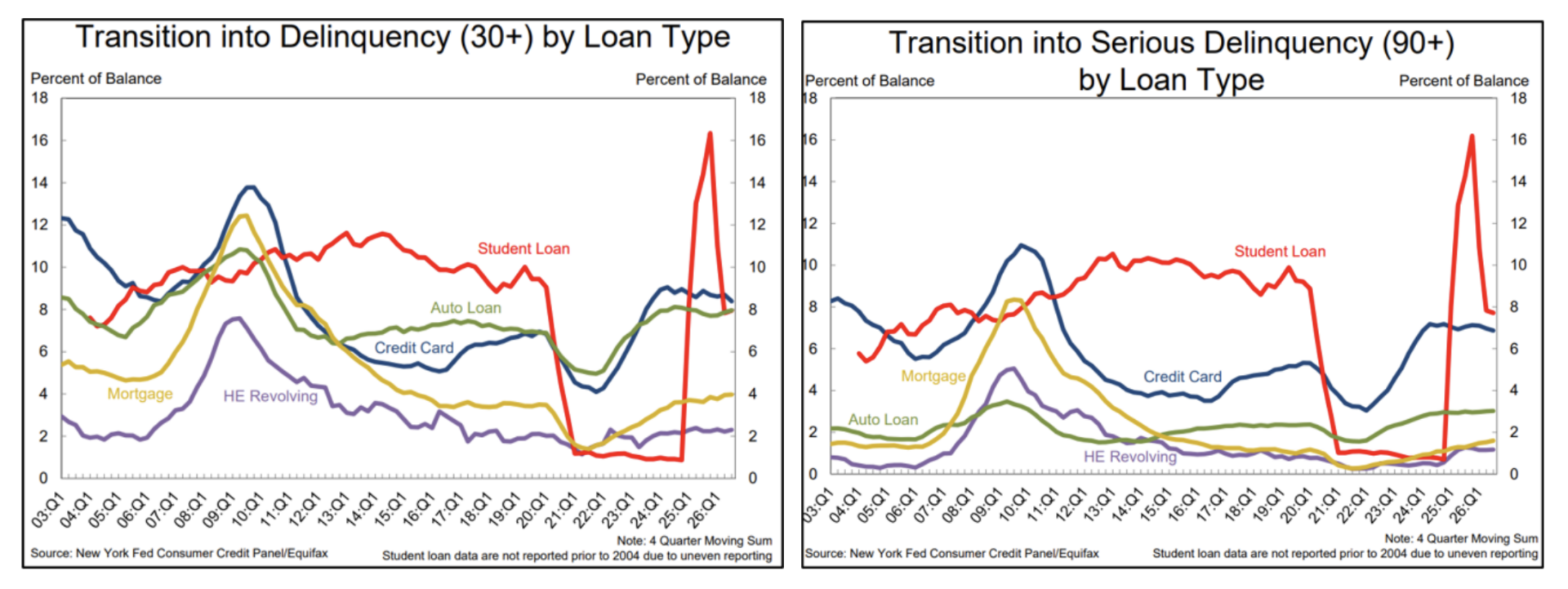
The charts below from the New York Fed illustrate the point. On the left, note the “gold” line; that’s the mortgage delinquency rate. The percentage of mortgages “transitioning into delinquency” after just 30 days has now returned to levels not seen since 2013/2014.
Likewise, those accounts transitioning into “serious delinquency” (right) and on the verge of default are now at levels we haven’t seen in about 10 years. Many recessions have started when the credit markets became choked off. Fear can do that. If banks start to sniff out a default problem, they’ll tighten lending standards.
Global Oil Market Data
One item we’ve all been monitoring is the Strategic Petroleum Reserves around the world. These have served as a pressure-relief valve or circuit breaker for oil prices so far. As oil prices began to climb, various countries released strategic reserves, helping offset supply shortages. That’s reportedly what prevented the proverbial “$150 oil super-spike”.
Are China’s strategic reserves running out? That would be surprising. Most analysis suggests they have until Q2 of 2027 before they become strained. Other parts of the world are in more trouble, and strategic reserves are tight. The U.S. is believed to be very close to operational minimums, based on estimates and some release behavior.
There could be something to this China story. If so, oil prices might be poised for a hike. If the “Strategic Reserves running out” story gains momentum, it would create real concern for Europe and other areas that rely on heating oil to survive the winter. Conditions still carry significant risk. What is interesting is the contrast between the “demand destruction” story and the constrained supply narrative.
Read more about how this, along with financial developments and other global issues, could affect your supply chain.