A Contradiction
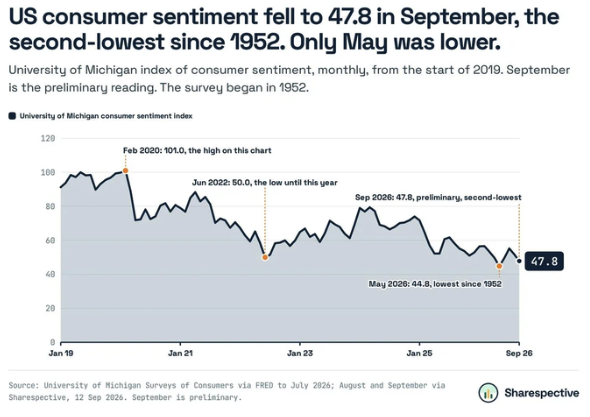
This week’s initial jobless claims just came in at 57-year lows… yet consumer sentiment came in near record lows. How can that be? Is there a problem with how the University of Michigan survey is conducted? With polarized political beliefs, consumers are still gainfully employed and making money but feel worse than ever?
The Michigan reading showed that consumers are worried about inflation pressures, which has led to severe pessimism about their personal finances. People are spending; however, the specter of uncertainty, geopolitical impacts, and oil and energy costs is ever-present.
Long-Term Bond Market is Really Floundering
Another major sell-off has hit, and it is abundantly clear the bond market is flailing. Yields on the US Ten-Year have now risen back above 5.0%, which is brutal. Thirty-year yields are at 5.46, the highest since 2004.
The bond market is looking to the Federal Reserve and assuming a longer period of rising rates, as it anticipates higher inflation while the overall economy continues to grow. This means the Fed has more runway for rate hikes before they start to impact growth.
The betting now is that the Fed will hike by another quarter point at its next meeting, and by the end of the year there could be two more – a total of a 1.0 rise.
Other global central banks are doing the same, with nearly all raising rates by at least one point. Oil is surging again, adding to the angst. Traditionally, the bond market reacts negatively to government deficits, inflation, and geopolitical turmoil, and it is facing all three right now.
Read more about how this, along with financial developments and other global issues, could affect your supply chain.