
By Alex Stark
The Ground Floor Is Talking: Are We Listening to the Freight Market, the Carvana Disruption, the AI Backlash, and the Real Driver Shortage Story?
Hope you all enjoy the unofficial start of summer this weekend. I don’t know about you, but it went by really fast. I cannot believe we’re already at Memorial Day. Here in my little corner of the supply chain, it was so cold for so long during the first couple of months of the year. Save for three days early this week in the 80s, it’s been rainy and unseasonably cool so far. So, here’s a great summer wherever this finds you.
Four stories caught me this week, all teaching the same lesson from different angles.
Forecasters are saying cautiously optimistic. Carriers are saying brace for impact. Auto dealers are saying customers love the franchise model. Customers are buying $51,000 Jeeps from their couches. AI executives are saying acceptance is coming. Voters are blocking data centers and booing commencement speakers. The trucking industry is saying “driver shortage.” The data is saying “regulatory reset.”
The ground floor is talking. The official narratives are saying something else. The gap between those two is where most operators are getting hurt right now.”
Here’s what I mean.
1. The Freight Sector Is Bracing While Forecasters Are “Cautiously Optimistic”
FTR’s (FTR Freight Intelligence) State of Freight webinar last week tried to thread a difficult needle, as reported in CCJ. The economists came in cautiously optimistic. The carriers, brokers, and shippers I keep talking to are using a different phrase: bracing for what comes next.
- Q1 2026 GDP came in at 2%, which is slightly below expectations due to a big swing in imports and trade balance.
- Consumer spending (the biggest contributor to growth) softened modestly and slipped below the healthy 2–4% target range.
- Investment held strong, but a lot of that strength is data center construction tied to AI buildout, not productive capital that creates downstream freight demand.
- FTR Chairman Eric Starks was blunt: “The big risk right now continues to be oil and inflation. We’re going to have to really keep an eye and see if the consumer can continue to keep buying.”
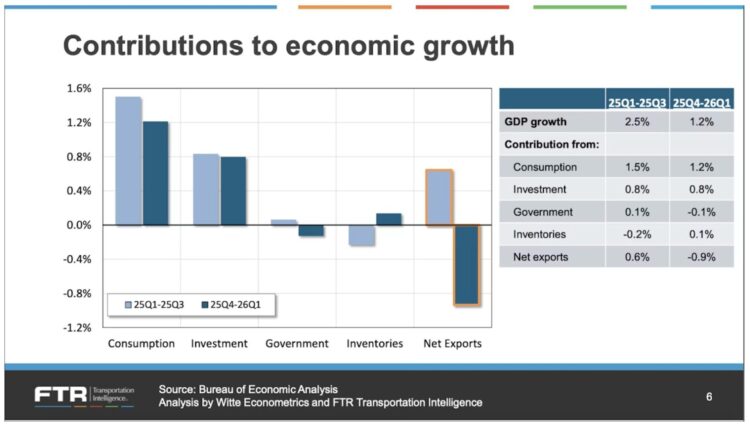

Both readings are legitimate. The interesting question is which one shippers should be planning around.
I’ve been writing for weeks that the freight market is resetting, not cycling. This is the data confirming it. GDP modeling is a lagging indicator. The outbound tender rejection rate (now at 16.29, according to FreightWaves), capacity exits, carrier bankruptcies, and the dispatcher’s search for a truck for Tuesday’s load are all leading indicators. The shippers reading the leading indicators are locking in capacity now. The ones waiting for the soft cycle to return are still reading GDP forecasts.
Same lesson as last week. Lock it in.
2. Carvana Sold Brand-New Jeep Wranglers from a Couch and Dealers are “In an Uproar”
Joshua Higginbotham used to spend entire days haggling at Jeep dealerships in Kansas City. Last week, he bought a brand-new $51,000 Jeep Wrangler from his couch. He paid $1,290 to have it shipped 1,000+ miles from Arizona. He skipped the negotiation entirely. From the WSJ piece this week:
I’m sure I could’ve gone into a dealership, got some more gray hairs, and negotiated it down to whatever Carvana had it at or lower, but I’m not going to do that to save $1,000.”
The Numbers Stellantis (and other Manufacturers) Can’t Ignore
- Carvana has acquired seven Stellantis dealerships for over $160 million in the past year.
- The Casa Grande, Arizona, location went from selling 30–50 vehicles a month to 350.
- That single dealership in the middle of the desert became the #1 seller in the U.S. for Chrysler, Jeep, Ram, and Dodge brands as of April.
- Carvana’s used-car business grew 40% year-over-year in Q1, with 187,393 retail units sold.
A South Florida Jeep-Ram dealer summed up the mood: “Stellantis dealers are in an uproar over this.” A February closed-door dealer meeting in Las Vegas reportedly ended early because the heated questions about Carvana wouldn’t stop coming.
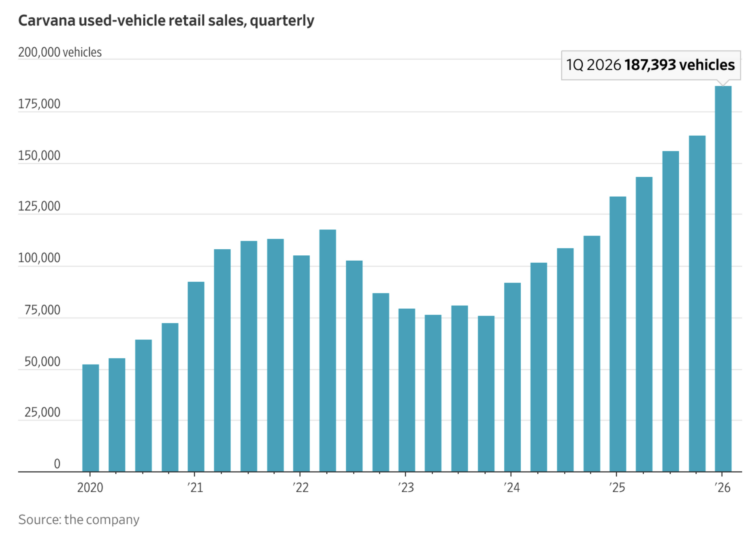
This Isn’t a Tech Story. It’s a Listening Story.
The wrong reading of this story is: “New technology is beating old technology.” That’s not what happened. What happened was that the franchise dealer body spent 50 years assuming customers wanted what dealers thought they wanted. No-haggle pricing. Home delivery. Transparent terms. A buying experience that doesn’t require burning a Saturday. Customers had been quietly asking for that for two decades. Carvana listened.
The most quoted line in the entire WSJ piece is from a dealer named Bowers. It’s the only line in the whole article that hits the right note:
If it is a better thing for the consumer, then I either adjust to that, or I’ve got to do something else—go sell popcorn. And I’m OK with that.”
Bowers gets it. Most of the industry hasn’t caught up to him yet.
The logistics and supply chain parallel is right there. The same thing is happening in 3PL and freight RFPs in 2026. Shippers don’t actually want “lowest rate per mile.” They want predictable capacity, fewer surprises, real-time visibility, and a partner who treats their business as more than a transaction. Providers that maintain the same marketing rate are losing market share to those that have figured out what customers actually want.
3. The AI Rebellion Is Going Mainstream
When former Google CEO Eric Schmidt delivered a commencement address at the University of Arizona earlier this month, telling graduates the “technological transformation” of AI would be “larger, faster and more consequential than what came before,” he was met with a chorus of boos from the graduating class. WSJ reported this week that he’s neither the first commencement speaker on AI to get booed this spring nor the last one expected to be.
What’s Actually Changing
- Public polling on AI has flipped from cautiously optimistic to actively negative in less than a year.
- Energy prices tied to data center construction are now a political issue in multiple states.
- Parental concern about AI’s impact on education and children’s mental health has gone from a niche worry to a mainstream voting issue.
- Local opposition is showing up in election results, blocked data center permits, and, most alarmingly, isolated acts of violence.
- In April, a 20-year-old Texas man allegedly threw a Molotov cocktail at OpenAI CEO Sam Altman’s home. That isn’t a poll number. That’s a temperature reading.
For 18 months, AI executives have been saying the public would come around once they saw the benefits. The polling moved in the opposite direction. The story is no longer “will the public accept this?” The story is now: how does an industry rebuild trust it didn’t realize it was burning?
The Bet Was Backward
AI built its strategy on the assumption that adoption would precede acceptance. The data center fights, the energy-price political pressure, and the Molotov cocktail at Altman’s house are all evidence that the bet was backward. For technologies that affect everyone (not just early adopters), acceptance has to precede adoption.
This seems to be a fairness issue. It’s not that the recent grads don’t use AI (I’m fairly confident they did during their college studies); it’s that a disproportionately small group at the top seems to be making crazy profits, while uncertainty blankets the rest of the population.
There’s an operating lesson here for any company leaning into AI right now. This is the year to be loud and transparent about how you’re doing it. Workforce reinvestment. Energy efficiency. Honest accounting of what AI is and isn’t doing to your team. The companies that survive the rebellion phase will be the ones that earned the trust of the community and team members before they needed it. The ones that didn’t will spend years trying to win it back.
4. It’s Not a Driver Shortage. It’s a Regulatory Reset.
For 15 years, the trucking industry has been talking about the “driver shortage.” This week, an Inbound Logistics piece argued that the framing has been wrong, and the framing mismatch is making everything worse. The right framing is “market reset,” driven by compliance, demographics, and capacity rebalancing all at once.
What’s Actually Happening
- A federal rule effective March 2026 prohibits asylum seekers, refugees, and DACA recipients from obtaining or renewing CDLs.
- Foreign-born drivers account for nearly 1 in 6 truckers in the U.S.
- 92% of carriers operate ten trucks or fewer. Small fleets are disproportionately exposed to the policy changes.
- State Department visa pauses, stricter English language proficiency enforcement, and tighter CDL standards across multiple states have all compounded.
- The DOT has closed 3,000 driver training programs and put another 4,500 on warning. That’s nearly half of the 16,000 registered training sites in the country.
- Estimated driver shortfall is expected to jump from 80,000 to around 130,000.
- Spot rates hit two-year highs in March, with national linehaul spot rates running 27% above year-prior levels by early May.
Why the Framing Matters
The wrong reframe (the one shippers keep reaching for): “If we just pay drivers more, the shortage will resolve. Wait for the market to clear.”
The right reframe is the one that should change how you think about transportation procurement for the next three years: the problem isn’t a shortage of people willing to drive trucks. It’s a regulatory environment shrinking the pool of who can legally drive trucks. No amount of pay increases fixes that. The fix is structural. The goal should be longer relationships with asset-based carriers, dedicated capacity, paying for reliability rather than chasing spot rate. This reset isn’t ending in six months. It might not end at all.
This is the most concrete version of the “what we built for years” theme I published last week. The whole spot-market freight economy was built on an assumption that supply could expand to meet demand. That assumption no longer holds. The carriers and shippers who see it as a regulatory reset rather than a wage problem are pulling ahead of those who don’t. We talk about how Holman Logistics thinks about this here.
Bringing It Together: The Ground Floor Is Talking
Four stories. One pattern.
- Forecasters say cautiously optimistic. Carriers say brace for turbulence.
- Dealers say customers love the franchise model. Customers are buying $51,000 Jeeps from their couches.
- AI executives say acceptance is coming. Voters are blocking data centers and booing commencement speakers.
- The industry says “driver shortage.” The data says regulatory reset.
The pattern is uncomfortable but consistent. There is a mismatch between the signals from the people closest to the work and those from those officially talking about it.
Heritage businesses survive a long time because they get this. They listen to the loading dock, the dispatcher, the customer service rep, and the customer who quietly stopped renewing. The ground floor is almost always saying something useful. If you choose to listen for it amidst the noise, that is the prudent decision.
One hundred and sixty-two years of doing this teaches you that the official narrative tends to lag behind the ground truth by six to eighteen months. Your competitive advantage is closing that gap.

Bonus #1: A Powerful Message Worth Hearing
Ed Elson of Prof G Media wrote a piece this week on substance abuse that I haven’t been able to stop thinking about. It’s one of the more honest things I’ve read about a topic most of us would rather avoid. He discusses the recent trends in drinking (the share of Americans who say they drink has been going down year-over-year). That is coupled with this striking visual, though.
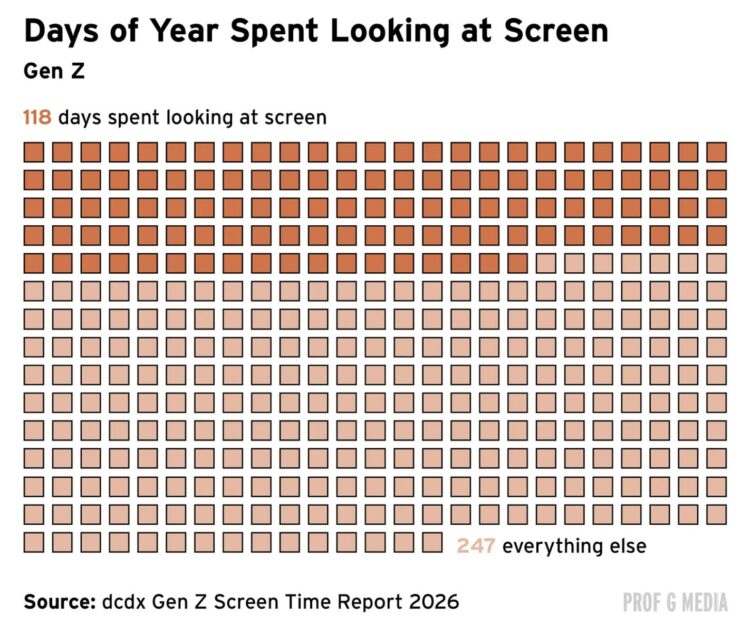
Elson says, “The phone isn’t something you pick up anymore — it’s something you put down (briefly) when you have to.” As a Gen Xer, I fear that the younger generation is becoming too isolated because of the phone.
It thematically connects to the rest of this post in a way that surprised me. Additionally, it’s a piece about listening to the ground floor of yourself. The data your body, your relationships, and the people who love you are sending you. The lagging “official narrative” is the story you’ve been telling yourself.
It’s worth a read. And if a colleague, family member, or friend is currently struggling, this is the kind of link worth sending. No pressure. No follow-up. Just the link.
Bonus #2: One Last Thing… BPM
After a heavy week of news, here’s a palate cleanser. pitchd.net/bpm is a clever little tool that tells you the beats per minute of any song. I instantly loved it. And I realize that it’s best if I only listen to and enjoy music rather than know how it is made. I was absolutely dreadful at the ‘pitch’ portion of the site. The computer said during one of my rounds… “I don’t even think you’re trying.” Hurtful.
On a friendlier note, use it to settle the argument with the friend who insists “Don’t Stop Me Now” is the perfect pace for tempo runs. (It’s 156 BPM. They’re right.)
Fun, fast, and useful. Two minutes well spent.
You’re welcome.
Listening to the Ground Floor of Your Supply Chain?
At Holman Logistics, we’ve spent 162 years helping shippers see past the obvious move, the spot rate that looks cheap, the optimization that creates a new bottleneck, the assumption that the next quarter will look like the last one. If you’d like a partner who asks the hard questions before disruption forces them to, let’s start a conversation.
Remember, it costs nothing to be kind.