By Alex Stark
The Math Behind the Hype—CX ROI, the AI Spending Surge, Compute Scarcity, and the Cyber Shock Coming for Supply Chains
Tax season wrapped this week, the Northeast finally (fingers crossed) committed to spring, and I managed a couple of jogs without bundling up like I was heading to the Iditarod. Small wins. But as I was catching up on industry reading between deadlines, four stories kept pulling me back to the same question:
Are we paying attention to the right numbers?
There’s a lot of noise right now. AI this, AI that, record spending, record disruption, will jobs be lost, is this “the end of the world as we know it”? But when I looked at the week’s biggest stories side by side, a pattern emerged. The companies winning aren’t the loudest. They’re the ones quietly doing the math. These companies are figuring out what actually creates value, and what’s just hype with a price tag attached.
Here’s what I mean.
1. The 400-Point Proof That Customer Experience Is a Hard Number
For years, customer experience (CX) has been dismissed in some boardrooms as a “soft” investment. Nice to have. Hard to measure. Hard to justify. A new study from Watermark Consulting has made that argument much harder to sustain.
Over an 18-year period, companies with the best customer experience outperformed the S&P 500 by more than 400 percentage points and generated 7.8 times higher stock returns than CX laggards. That’s not a marketing slide. That’s nearly two decades of data across expansions, recessions, and everything in between.
What I found most compelling was Jon Picoult’s explanation of why the gap keeps widening. He calls it a …
Once you get that flywheel moving and you’re generating repeat business and referrals and you’re enjoying all of the cost advantages of having happy customers, it just sort of continues building on itself and accelerates the performance advantage.”
Happy customers don’t just buy more. They cost less to retain, refer new business at no acquisition cost, and forgive the occasional stumble. CX impacts the income statement in two ways: it increases revenue and reduces operating expenses. That’s a combination most investments can’t touch.
 In my corner of the world, this hits especially close to home. It’s exactly why Holman’s Extraordinary Service Process isn’t a tagline. It’s the flywheel in motion. Small and mid-sized shippers in particular feel the difference between a vendor that shows up with a standardized playbook and one that actually learns the business first. The math on that difference just got a lot more visible.
2. The $2B-to-$53B AI Freight Train Is Leaving the Station
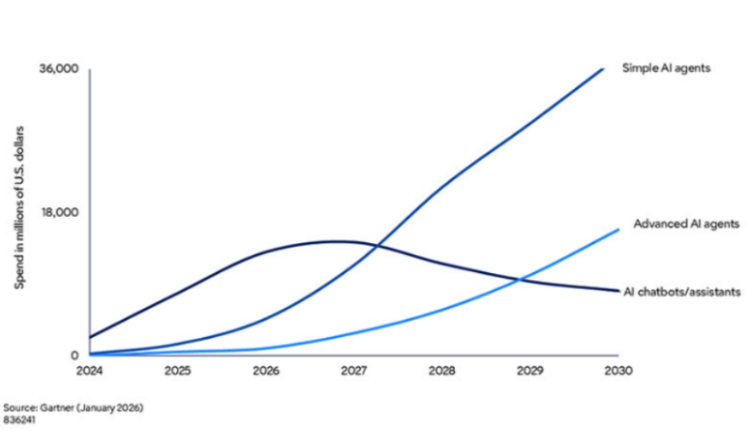
Last week, I wrote about Casey Winters’ idea that AI capabilities only shift a few times a year, and that everything else is noise. This week, Gartner dropped a forecast that qualifies as one of those shifts.
Supply chain management software with agentic AI capabilities will grow from less than $2 billion in 2025 to $53 billion by 2030. That’s not a typo. That’s roughly a 26x jump in five years.
The word that matters there is agentic. We’re moving past AI that analyzes data and makes recommendations for a human to approve. Agentic AI acts. It reroutes a shipment when a lane goes sideways. It matches a load to a carrier without waiting for a dispatcher. It flags a maintenance issue and schedules the service. The dispatcher, the planner, and the analyst all still matter, but they’re supervising the system instead of running it step by step.
A companion MHI and Deloitte report released this week backs this up: 71% of supply chain leaders say AI is disrupting the industry, and 24% call the disruption transformational—the strongest signal in the decade they’ve been running the survey.
The practical takeaway hasn’t changed. Don’t try to do everything. Pick two or three use cases where agentic AI will compound value for your operation. Examples would include exception handling, dynamic routing, carrier matching, and predictive maintenance. Get disciplined about them. The $53 billion is going to be spent by someone. The question is whether it’s spent well or just spent loudly.
3. The AI Math Nobody’s Showing You: We’re Running Out of Compute
Here’s where the story gets uncomfortable. For all the enthusiasm about AI adoption and Gartner’s $53 billion forecast, a WSJ piece this week pointed out something the industry doesn’t love to discuss: we’re running out of compute.
OpenAI’s CFO Sarah Friar put it bluntly:
We’re making some very tough trades at the moment on things we’re not pursuing because we don’t have enough compute.”
Marinate on that for a moment. The company most people associate with the AI boom is rationing what it builds because it can’t get enough computing power. Anthropic has reportedly limited its newest model to roughly 40 organizations. Access to the cutting edge is quietly becoming a gated privilege.
This is the logical bookend to the data center backlash piece I wrote about last week. Communities are saying “no, thank you” to new data centers right as demand for compute is exploding. Something has to give. Likely, it won’t be pretty.
A few things to expect:
- AI pricing is going to get weird. State-of-the-art tools may be gated behind enterprise relationships or priced out of reach for smaller teams.
- “Available but slow” becomes a new tier. Even when you can pay, you may not get the speed you’re used to.
- The abundance era is ending. The “try anything for $20 a month” phase of AI may already be behind us.
My practical advice? If you’ve found an AI workflow that genuinely moves the needle for your team, document it now. Lock it into your process. Don’t assume your favorite tool will stay the same price (or even available) 18 months from now. Build flexibility into your stack and stay vendor-agnostic where you can.
4. The Next Supply Chain Shock Won’t Be a Shortage—It’ll Be a Breach
If AI is the new plumbing running through supply chains, the pipes are also a brand-new attack surface. And a piece in SupplyChainBrain this week made a compelling case that the conversation about supply chain risk is about to shift dramatically.
When Jaguar Land Rover’s production line ground to a halt at the end of Q3 2025, it wasn’t a parts shortage. It was a cyber breach. Weeks later, airports across Europe descended into chaos after attackers compromised Collins Aerospace’s MUSE software. Household names like Hertz, Google, and Farmers Insurance have all made headlines for breaches that started not inside their own networks, but inside a vendor’s.
The author’s framing stuck with me. Production delays and inventory shortages are no longer the leading cause of supply chain disruption. The new fragility is digital interdependence. Every vendor relationship is a potential attack vector. A single compromised supplier can halt a manufacturing line, delay shipments, and expose customer data. And this can happen even when your own core systems are perfectly secure.
The Numbers That Should Make Everyone Pause
- 61% of cybersecurity leaders experienced a third-party or supply chain attack in the past 12 months.
- 28% of smaller firms reported operational disruption after a breach, versus 21% of large enterprises. Smaller partners often lack the resources to contain fallout.
- Only 23% of cybersecurity leaders rank supply chain compromise among their top emerging threats. This is potentially a dangerous blind spot.
That last stat is the one that got me. A majority of leaders are experiencing these attacks, but fewer than a quarter rank them as a top concern. That gap between reality and preparedness is exactly where the next big headline will come from.
Here’s the uncomfortable shift this requires. Cybersecurity isn’t an IT problem anymore. It’s a vendor selection problem. When you evaluate a 3PL, a warehouse management system, a carrier platform, or any technology partner, their cybersecurity posture needs to sit right next to their on-time delivery rate and their pricing model on your evaluation scorecard. If it doesn’t, you’re auditing for yesterday’s risks.
Smaller vendors are what attackers are calling the “soft underbelly” of the supply chain. Weaker defenses. Fewer dedicated security staff. Less mature governance. Not because those teams don’t care, but because they don’t have the resources larger enterprises do. The companies doing this well are treating vendor cybersecurity due diligence with the same rigor they once reserved for physical logistics. The ones that aren’t are hoping they don’t end up in the next headline.
Our Summary? Do the Math
In the four things I learned this week, there appears to be one quiet thread. The winners are doing the math.
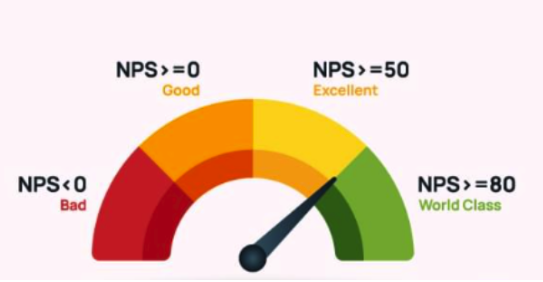
They’re pricing CX/NPS as a real, compounding asset instead of a soft virtue. They’re adopting AI with discipline instead of FOMO. They’re preparing for compute scarcity and cyber risk before those costs show up on the P&L. None of them are glamorous. However, all of it works.
Heritage companies have a small advantage here. When you’ve been around 162 years as we have, you learn pretty quickly that fundamentals don’t change as fast as the headlines suggest. Take care of customers. Invest carefully. Know who you’re doing business with. Watch your blind spots. The tools change. The math doesn’t.
Before you go…2 Bonus Items
Now that I may have you thinking about math, cyber-attacks, and impending AI doom, here are two items. One is practical, good-preparedness stuff from our friends at ALAN (American Logistics Aid Network), through their work with Colorado State University on 2026 hurricane activity.
And for anyone who also spends too much time on spreadsheets or working on the computer in general. Here’s a wonderful palate cleanser I just stumbled upon. It’s called Window Swap.
It lets you look out someone else’s window from anywhere in the world. Ten minutes of rain on a rooftop in Kyoto, or a kitchen window in Lisbon, or the beginning of spring. It’s all random, and oddly meditative.

This is a shot of Hong Kong’s airport.
Zero productivity value. Highly recommended.
You’re welcome.
Looking for a Supply Chain Partner Who Sees Your Business First?
At Holman Logistics, we’ve spent over 160 years helping businesses navigate disruption with hands-on expertise and a service-first approach. Whether you’re an SME looking for a 3PL that understands your unique needs or an enterprise seeking operational efficiency—let’s start a conversation.
Remember, it costs nothing to be kind.