Latest Logistics Managers’ Index (LMI) Results
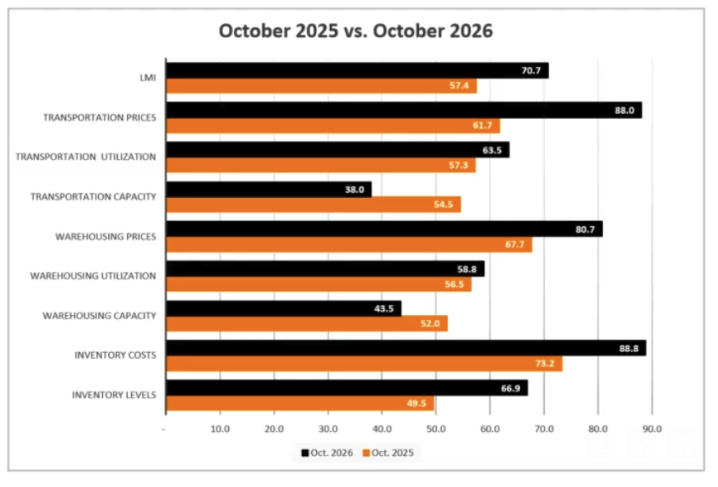
Overall, most readings are trending higher, but expenses are notably higher than a year ago (chart below). It appears that most enterprises are waiting until the last minute to pull in inventory (imports) and then try to sell it. Costs are high but transitory (compared to 2022). Researchers do not expect inventory levels to remain high in 2027. In 2022, unsold inventory languished in DCs.
Inflationary pressure has been present since March 2026, but capacity is contracting. Perhaps that reflects nervousness about where to invest? Bottom line: costs are up, and uncertainty is higher.
Another theory, based on the data, is that enterprises are building buffers upstream. Container traffic is up, yet holiday traffic should be tailing off. Finally, will consumers show up for the 2026 holiday?

Impact of the U.S. Midterms on Supply Chain
We do not take a position on politics. We are only interested in reporting on the impact the midterm election will have on the logistics and supply chain industry. The results and impact will become clearer over the coming weeks and months. Overall, businesses will seek greater stability and less unpredictability in global trade, tariff policy, and industry supply network conditions.
The most prudent advice may be to review existing business and supply planning processes to identify opportunities to streamline and strengthen decision-making. Also, prepare for future AI enablement opportunities that deliver meaningful benefits for the business and workers.
Read more about how this, along with financial developments and other global issues, could affect your supply chain.