By Alex Stark
Closing the Distance: Inflation Finds a Trend, GE Appliances Goes Zero Distance, Target Pairs AI With UX, and Kimberly-Clark Bets $40 Billion.
My youngest starts high school in a few weeks, and because she wants to play tennis for the school, tryouts begin on Monday. Labor Day is still in the distance, yet part of the summer already feels finished. We’re stoked to watch her play and to have a blast being part of a team as the school year begins. As I write this, I’m feeling okay about it all. We love the summer, but the gravitational pull toward autumn, back-to-school, and all things pumpkin is too strong to resist.
Four things caught my eye this week from my slightly cooler-at-night corner of the supply chain. They were all versions of the same idea. Organizations are working to shorten the distance between things. Between a supplier and a plant. Between a technology and the people it’s meant to serve. Between two companies becoming one. And, in the case of inflation, between where prices are and where the Fed wants them to be.
Let me know what you’re seeing.
1. Inflation Cooled Again, and This Time the Trend Is Real
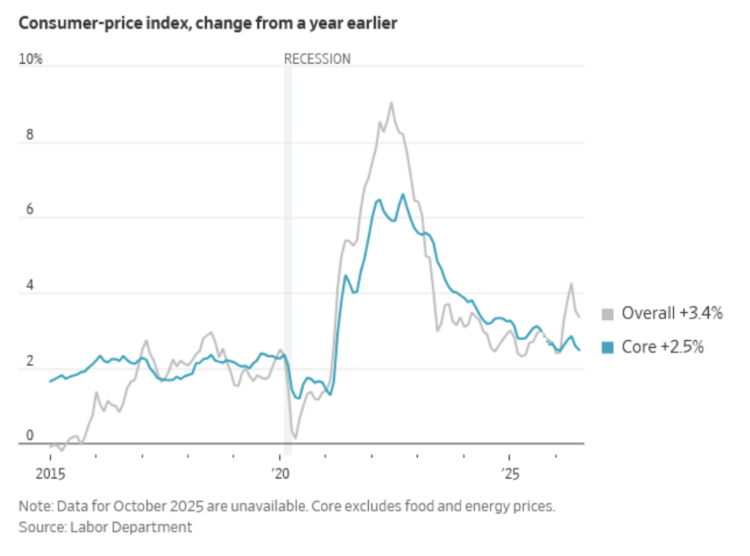
July CPI, released Wednesday, came in at 0.1% for the month and 3.4% year over year, down from June’s 3.5%. Core CPI rose 0.2% for the month and 2.5% annually, the lowest reading in five months.
Why This One Isn’t a Head Fake
Three weeks ago, I said the June report was a head fake because the headline drop was almost entirely due to energy, while core remained at 2.6%. Everything still feels a little shaky given the ongoing uncertainty in the Middle East and its ramifications across nearly everything. As I wrote last week, maybe we are starting to see a trend. The reason is the same test I applied to the ISM manufacturing report last week. It’s worth observing the breadth of results across all sectors.
- Core has now eased two months running, to the lowest level since February.
- Energy prices declined; however, gas prices are still 25% higher than a year ago.
- Shelter (housing and hotels) rose modestly to 0.1%. That’s a huge shot in the arm for the broader inflation rate since shelter accounts for roughly a third of the index.
- Elsewhere, it is mixed. Car insurance prices declined, medical care rose 0.4%, and airline fares jumped 2.2%.
For the Fed, traders figure there’s a 60% chance rates will be held at the next meeting. That’s a shift from last week, when a strong ISM report and three dissenting officials had the market leaning the other way. The FOMC (Federal Open Market Committee) doesn’t meet until September, so there’s another full month of data ahead. Plus, the monster asterisk that hangs over every reading still applies… the economy is ultimately tied to the war in Iran, and it remains the single biggest lever.
Two consecutive in-line months is the first genuinely stable inflation picture we’ve had in 2026. It certainly is not anything to celebrate. 3.4% remains well above the Fed’s target of 2%. If you’ve been holding off on pricing decisions, waiting for the volatility to settle, this is the first month when waiting no longer looks obviously smarter than acting.
2. GE Appliances Has a Strategy Called “Zero Distance,” and It’s Exactly What It Sounds Like
GE Appliances will source one-third of the chips for its new $1 billion Louisville laundry plant from Texas Instruments (TI), nearly doubling its spend with TI. Production starts in 2027. The chips come from TI manufacturing facilities in Sherman and Richardson, Texas, and Lehi, Utah.
The strategy behind it is called “Zero Distance”, and the name is the whole idea. Shorten the average length of your supply chain so you can react faster when demand changes. GE Appliances works with roughly 6,500 U.S.-based suppliers and has committed $3 billion to U.S. production through 2029, on top of $3.5 billion a decade ago. TI’s own $60 billion investment across seven locations makes it one of the few suppliers offering high-volume domestic semiconductor manufacturing.
GE Appliances’ senior director of sourcing framed it in terms of response time rather than cost or politics. A shorter supply chain lets you respond more quickly to your consumer. That’s a different argument from reshoring, and a more durable one. By creating resiliency, there is continuity of supply.
In June, I wrote about rare earths used in manufacturing and noted that decoupling takes a decade and a great deal of capital, and that most companies hadn’t started yet. Conversely, this is what starting looks like. One third of the chips is a meaningful step, but not a solved problem. Two thirds are still sourced from outside the country. That’s the realistic pace of this work, and it’s the same lesson as the April helium piece and the July Hormuz retrospective. Every operation has a dependency that could become a chokepoint. Finding an alternative is neither fast nor cheap.
The part worth contemplating for your own operation is that distance isn’t only physical. You need to account for lead time, decision latency, and the number of handoffs between a demand signal and someone with the authority to execute. That’s the case for trusted partners positioned close to your consumers, who act as an extension of your business, and that’s exactly what we do.
3. Target Hired a Chief AI Officer and a UX Leader on the Same Day. The Pairing Is the Point.
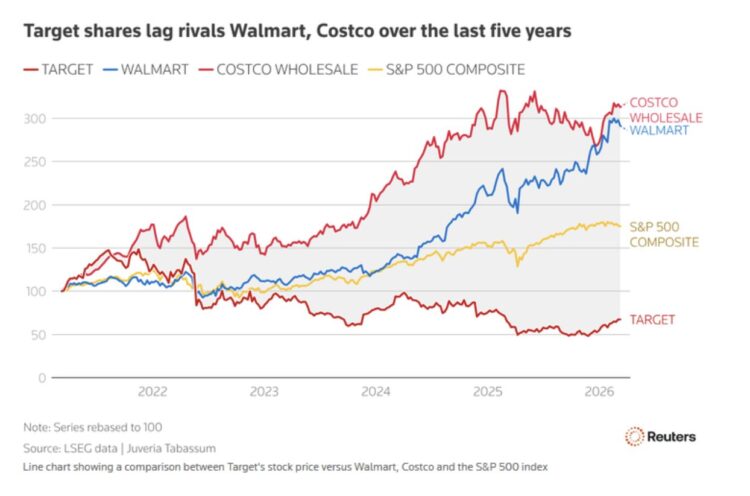
Target named Chandhu Nair its first chief AI officer, effective August 24. He arrives from Lowe’s, where he ran stores, data, AI, and innovation. On the same day, the company promoted Purvi Shah to senior vice president of UX (User Experience). Both land at a retailer whose Q1 2026 net sales rose 6.7% to $25.4 billion. Target is in the midst of a multi-year turnaround strategy.
CIO Dive made a sharp observation about why the pairing matters. Most companies bolt AI onto existing applications and then go hunting for productivity gains. Putting the AI mandate alongside user experience flips that sequence. You start with the outcome you want for the customer and work backward to where the technology truly helps.
Nair’s provided his overarching opinion about the company’s direction. He said the meaningful AI stories won’t come from a model; they’ll come from the front lines, and that the best technology conversations happen in stores rather than in conference rooms. His stated priority is to listen and learn. The line I keep coming back to:
It (AI) will be measured on the frontlines. In how we make experiences better for guests.”
A Direct Answer to Last Week’s Problem
Last week, I wrote about Gartner’s finding that 67% of supply chain digital investment now goes to AI, while 55% of chief supply chain officers can’t say what it returns. Gartner’s diagnosis was that the problem isn’t the technology but the coordination, and that only 23% of organizations have a formal AI strategy. Target’s announcement seems like a point-by-point response to that research. For Target, success is built on enterprise-wide coordination, ownership, and outcomes over capabilities.
Of course, this is all intention, not yet a lasting result. Naming a chief AI officer is the easy part. Whether the coordination happens is a 2027 question, and plenty of companies have announced structures that never changed how a single thing worked. The true test is positive momentum, evidenced by increased quarterly sales.
Still, the test is a good one to follow. If you’re spending money on AI without a named owner and without a defined customer-facing outcome, you don’t have a strategy. You have a collection of projects. Ask who owns the coordination and what outcome each initiative serves. If nobody can answer both, that’s your finding.
4. Kimberly-Clark Is Betting $40 Billion That Its Operating Model Travels
Kimberly-Clark is preparing a full reorganization as it closes its $40 billion acquisition of Kenvue, one of the largest U.S. consumer staples acquisitions in history. Kimberly-Clark CEO Mike Hsu said on the Q2 call that the regulatory process is on track and integration planning is progressing across all workstreams, then added a line that is either confidence or foreshadowing:
The closer we look, the better it gets.”
The Scale of the Transaction
- The combined company would generate roughly $32 billion in annual sales for a health and wellness portfolio which would include 10 billion-dollar brands.
- Kimberly-Clark brands are Huggies, Kleenex, Cottonelle, Poise, and Kotex. Kenvue brings Tylenol, Neutrogena, Listerine, Aveeno, Band-Aid, and Listerine.
- An integration management office is running more than thirty workstreams spanning procurement, manufacturing, distribution, technology, and commercial operations.
- Kenvue is simultaneously restructuring on its own, with roughly $250 million in pretax charges this year, aimed at transforming its supply chain and reducing complexity.
Two companies restructuring at the same time they merge is challenging work. The stated plan is to reduce duplication while applying the operating model Kimberly-Clark built during its “Powering Care” transformation to Kenvue’s consumer health portfolio.
Where We’ve Seen This Before
In July, I wrote about Smucker paying $5 billion for Hostess and writing off nearly $3 billion because the deal didn’t go as planned. The miss wasn’t because of the brand or the price. Smucker imposed a long-shelf-life operating model on a fast-perishable business. Thus, it broke the engine it had just bought.
Kimberly-Clark is now running the same maneuver on an eightfold scale, explicitly planning to apply its operating model to a business it just acquired. The question isn’t whether the model is solid. Kimberly-Clark’s Powering Care strategy has produced real operating momentum, and Q2 backs that up with adjusted operating profit up 6.2% on essentially flat sales. The question is whether it fits a consumer health portfolio with different margins, regulatory exposure, and customers that come with the deal.
There’s a smaller thread I’ll be watching, too. Back on July 3rd, I wrote about Kimberly-Clark’s talent playbook, the citizens, translators, and wizards framework for building AI capability across the organization. I’ll keep checking whether that model survives a $40 billion integration or gets absorbed into the workstreams and quietly disappears.
The takeaway for any company doing an acquisition of any size is a comprehensive understanding of the operating model. What does the acquired business require to run well, and can your supply chain deliver it? History has shown that diligence sometimes tends to be strong on the numbers and thin on the fit.
Closing the Distance
Inflation narrowed the gap to the Fed’s for a second straight month. GE Appliances is spending real money to shorten the distance between its suppliers and its plants. Target put its AI and UX leaders in the same announcement to shorten the distance between capabilities and consumers. Kimberly-Clark is spending $40 billion to create a consumer health juggernaut, betting that its operating model will integrate with Kenvue.
Distance is the tax nobody sees in the financials. Distance between the supplier and the line. Between technology and the end customer it was built for. Distance shows up as lead time, latency, and things getting lost in handoffs. Most of the interesting work in this industry is the art and execution of closing that gap.
Where’s the distance costing you in your supply chain?
Bonus #1: Pick the Right Bathing Suit
If you’re still hitting the ocean, lucky you. Here’s an article on choosing the right bathing suit to help keep you safe in the water.
The details are genuinely useful and not widely known. Bright neon colors, especially neon pink, orange, and green, remain visible underwater. Blues, whites, and grays effectively disappear, especially in the first few feet of water, where visibility matters most. Might be worth keeping in mind when you’re shopping for swimsuits.
Bonus #2: The Prize Is Back in the Box
As a Gen-Xer and a longtime cereal fan, I loved this story. To combat falling sales, more than 13% over five years, food manufacturers are bringing back prizes in cereal boxes. This was an all-time staple in my household growing up. As the oldest, I usually got first crack at the fresh box, digging my way to the prize, which at the time was an awesome plastic toy.
I know I’m doing my part for the industry. I still love and eat cereal regularly. It will be interesting to see whether younger buyers embrace the analog, tactile strategy.
Bonus #3: Hit the Dot
Here’s a fun little diversion I stumbled across this week. The best I could muster was 93.4%. I needed to channel the ten-second count-off skills I learned playing basketball. See if you can beat it.
You’re welcome.
One Last Thing… Dogs Are (Still) Undefeated
There are dog people, and there are cat people. Cats are fine. Dogs rule. Here’s another example of why dogs are undefeated.
Researchers at the University of Vienna ran scans on awake, trained family dogs while showing them photographs of human faces. Whole-brain analysis identified distinct neural patterns that separate fear from anger and sadness. That’s the first evidence that dogs distinguish among specific negative human expressions rather than simply sorting our moods into good and bad. They also process human smiles in a unique region of the brain. Case closed.
And yes, I did cry when I read Marley and Me, The Art of Racing in the Rain, and certainly, Old Yeller.
Remember, it costs nothing to be kind.