The Fed Holds Again
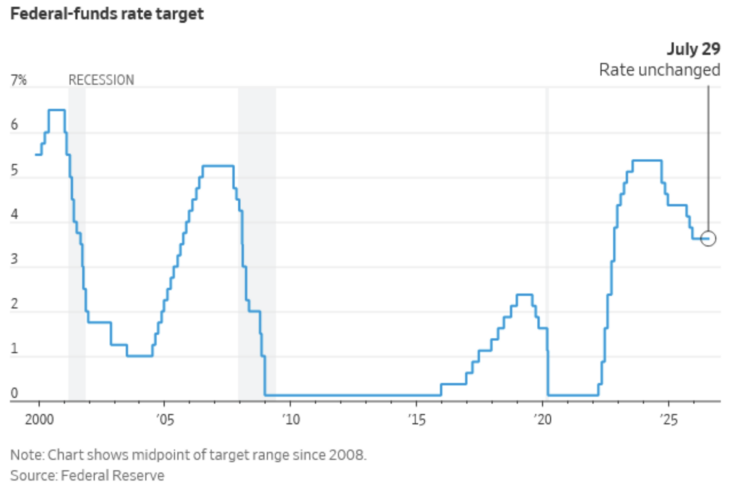
On Wednesday, July 29, 2026, the Fed left its benchmark rate unchanged at 3.50%-3.75%, marking the fifth consecutive meeting without a move.
The interesting part was the vote: 9 to 3, with three regional bank presidents dissenting and voting for a quarter-point increase. Beth Hammack of Cleveland, Neel Kashkari of Minneapolis, and Lorie Logan of Dallas all wanted to hike now.
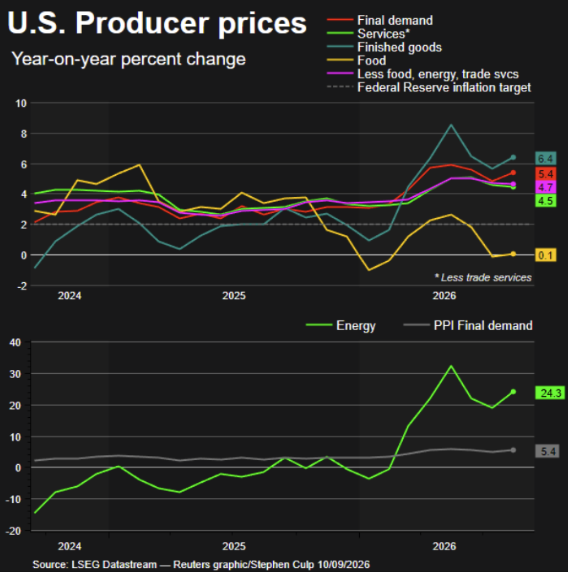
This was Kevin Warsh’s second meeting as chair, and inflation has now been above the 2% target for more than five years. The committee’s June projections already penciled in a one-quarter-point increase by the end of 2026, so the direction isn’t in dispute. The timing is.
Potential Global Supply Chain Impact
Water levels for traffic on Europe’s rivers are getting dangerously low.
This situation (occurring alongside disruptions in the Strait of Hormuz and the Red Sea) creates a challenging global petrochemical landscape.
A Hormuz shock that might otherwise be “manageable” with inventory buffers and logistics flexibility becomes much harder to absorb when the Rhine River simultaneously strips away the physical distribution that would normally cushion the impact. This raises the likelihood of more force majeure declarations, price spikes in intermediates (as seen in the 2018 spot price jumps for butyl acetate and methanol), and downstream impacts across polymer, plastics, and construction-materials supply chains.
Read more about how this, financial developments, and other global issues could affect your supply chain.