By Alex Stark
I was joking with a friend the other day about pulling out the driveway snow markers we have along our driveway. When is the right time? For those of you who do not experience the winter bliss of several inches of snow over several months, these markers indicate where the driveway is for the snowplowers. It is a bizarre ritual I perform nearly every March.
 I don’t want to anger nature by removing them too soon.
Even though, as I write this, it’s sunny and 53 degrees, we’ve been ambushed and punished by early-spring snowstorms that dumped multiple inches of snow. It’s this uncertainty that seems prevalent not only in the weather report but also throughout the economy, both globally and domestically.
Hope is not a strategy, and neither is superstition. This fingers-crossed, wait-and-see strategy is not sustainable. It feels akin to the current state of the global economy and its effect on my corner of the world in logistics and supply chain.
Inflation is holding steady (for now), but how long can that hold true amid events in the Middle East and continued job uncertainty at home?
In a Wall Street Journal article on inflation reports influencing expectations for an upcoming Federal Reserve policy update, chief economist Joseph Brusuelas was quoted as saying, “The February data is already completely inconsequential.”
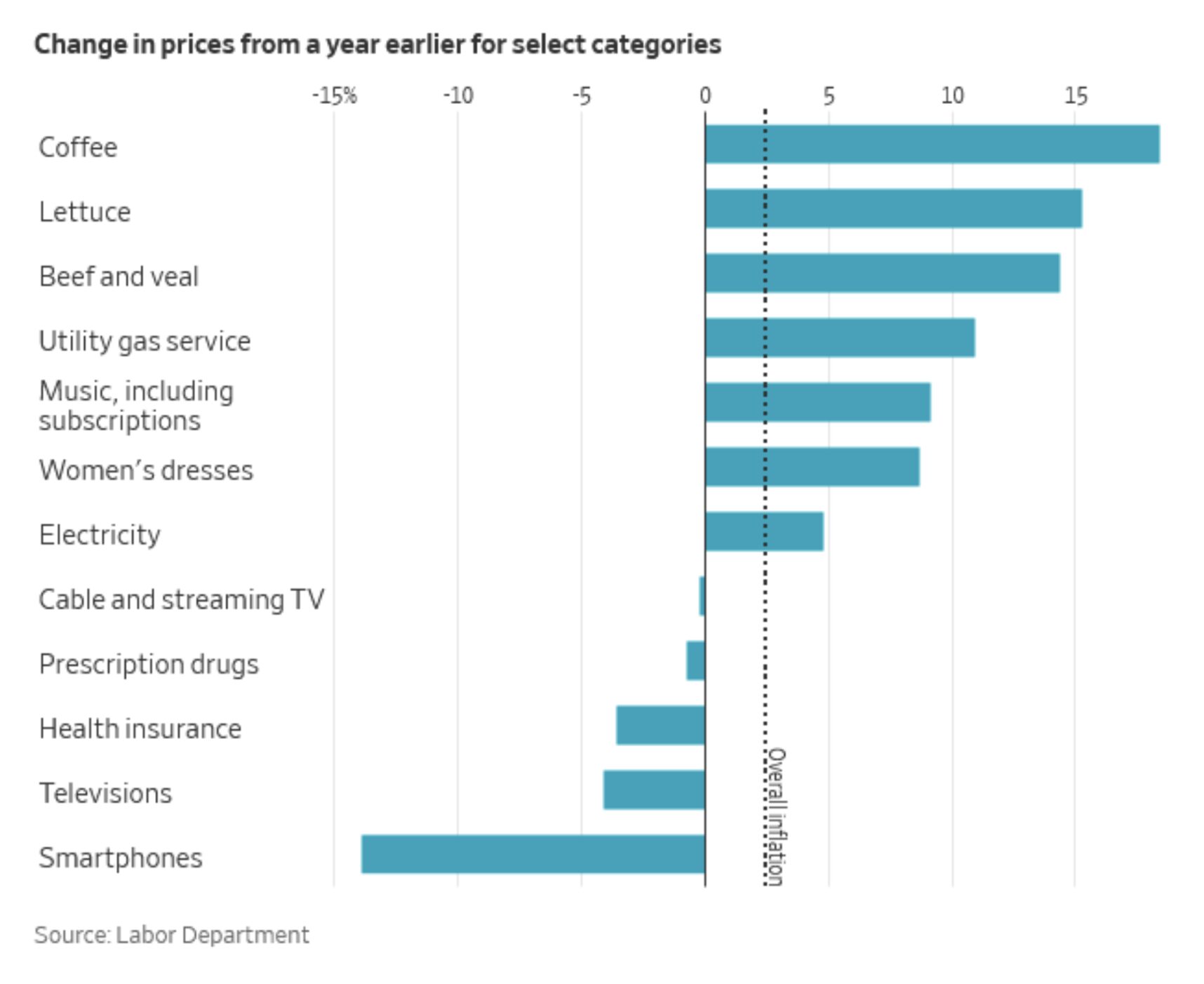
The Dow Jones Industrial Average, NASDAQ, and S&P 500 are all trending lower, while food, energy, and shelter costs are going up.
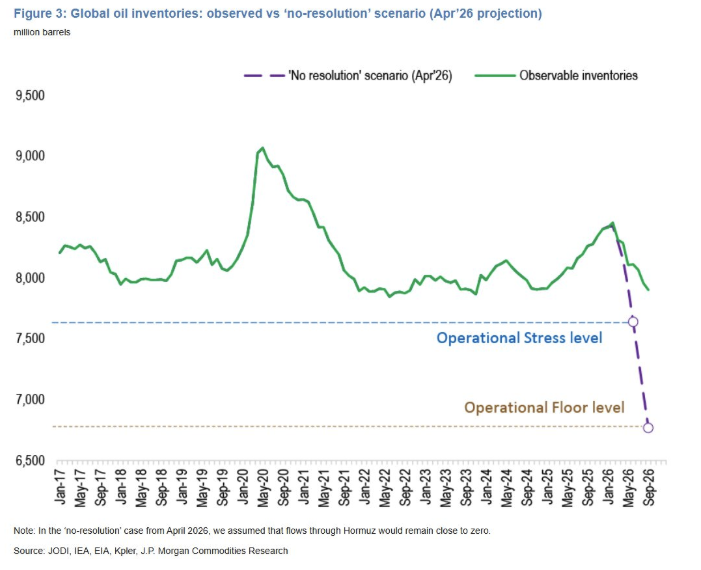
Gasoline and diesel prices continue to rise. The immediate effect on the transportation sector is sharp. Trucks, trains, ships, and planes all need fuel to move freight. As those costs go up, transportation companies will need to recoup them and pass the extra expense on to shippers. Air travel will become more costly; freight rates will rise, and all of this will ultimately fall on consumers.
“Gasoline and other energy items represent a fairly small portion of consumer spending—about 6%, by the Labor Department’s reckoning. But gasoline can have an outsize effect on views of inflation: Not only is it a frequent purchase, but its price graces big signs alongside the road. As of Monday, a gallon of regular gas averaged about $3.50, according to the Energy Information Administration. That compared with a February average of about $2.91.”
I did try. I really attempted to go a week without writing about AI.
The recent court ruling in Amazon’s favor caught my attention. A federal judge granted Amazon a preliminary injunction against Perplexity. Perplexity is a free, AI-powered search engine that focuses on providing accurate, cited answers from real-time web searches. Amazon wants to prevent Perplexity from using its technology to shop on its website on behalf of a human customer.
As people rely on AI for more tasks, shopping is one of them. AI companies that use large language models (LLMs) assist consumers in finding and purchasing products online. However, retailers like Amazon risk losing personal human interaction.
“Unlike humans who visit shopping sites, AI bots bypass ads and sponsored search results, a high-margin revenue driver for big retailers. Advertisers are expected to spend $71 billion on so-called ‘retail media’ in the U.S. this year, according to eMarketer.”
This advertising business accounts for a large portion of Amazon’s revenue. Reports indicate that Amazon generated $68 billion in ad revenue in 2025. Amazon wants to maximize the time consumers spend on their site. Keeping them engaged is a pipeline for increasing ad revenue.
“No visibility, no click through, no advertising revenue.”
Without human visitors to the Amazon site, the company will not be able to monetize shopper behavior. But not all retailers are unwilling to work with AI companies, provided there are guardrails in place.
Walmart partnered with OpenAI to allow shoppers to buy products using ChatGPT. Walmart is also planning to work with Google’s AI platform, Gemini. John Furner, Walmart’s CEO, said that bots are “the next great evolution in retail.”
Furner just took the reins from Doug McMillon. Furner is a 32-year Walmart veteran. He started working for the company as an hourly associate in the garden center of his local Bentonville, Arkansas, store. Furner is tasked with keeping Walmart on track. Walmart’s online business grew 27% last quarter, and in February, Walmart became the first non-tech company to reach a $1 trillion valuation.
Walmart topped the Fortune 500 for 13 straight years but recently fell to second place behind Amazon, even though Walmart’s revenue has been up consistently for the last 20 years.
As Furner assumes his role as CEO, he reflects on the lessons he learned from his father, Steve, who was part of Walmart’s operations team. Furner says the most important leadership lesson he got from his father is the belief in the power of community and what it can accomplish through kindness and support.
“This is an environment where great performance definitely provides opportunity, and people can excel in their career,” Furner said.
Another retailer seizing on its recent positive momentum is Brooks Brothers, the luxury American clothing brand founded in 1818. It is the oldest apparel brand in continuous operation in the U.S. Its creative goal and new brand positioning are to move to a casual, youthful style while retaining its classic roots. The company plans to honor its heritage to grow its customer base.
Marisa Thalberg, chief customer and marketing officer of parent company Catalyst Brands, told ADWEEK, “Brooks Brothers is truly part of the fabric of America’s fashion and culture. We’ve dressed some of the most notable figures in history. And yet, if you think about the zeitgeist in fashion right now – where the desire for tailored style is skyrocketing, and classic fashion is dominating popular culture – it’s really Brooks Brothers’ moment.”
The brand filed for bankruptcy in 2020 amid declining sales, which coincided with a lack of demand for business attire during the COVID pandemic. It didn’t take long for the business to bounce back. Upon modernizing, the brand went from bankruptcy to a valuation of nearly $1 billion by the end of 2023. It’s a truly American comeback story.
Zeitgeist is a cool word. Leave it to the Germans to have a word for nearly every feeling in the human experience. It translates as “spirit of the age,” and that vibe is expressing itself in the current “friction-maxxing” articles. Last week, it was Gen Z buying iPods as single-use devices to keep distractions to a minimum. Now, it’s subscription burnout. The latest trend is individuals feeling as if they have everything yet own nothing.
There seems to be an analog rebellion. People are ditching streaming. Why pay nearly $300 annually for a top-tier subscription service when you can buy a physical box set of your favorite sitcom for $100 and have it forever?
I love the line from this Fortune article about this subject – “Amazon’s not going to come into your house and take your DVD movies. They’re yours forever.”
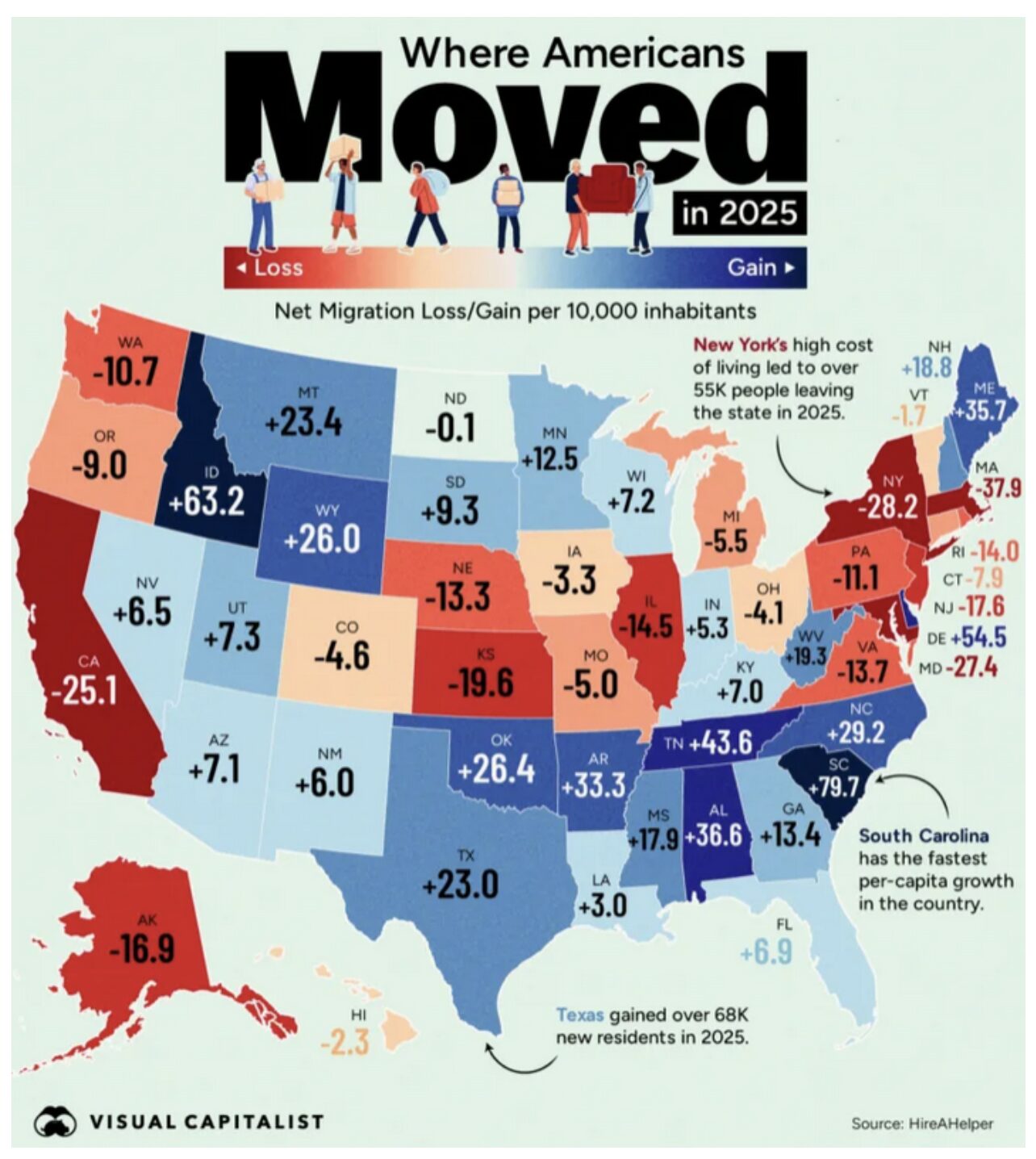
As I think about the younger generation, I start considering people moving around the country. Nearly 15 million people in the U.S. moved in 2025. Many relocated seeking a lower cost of living, better job opportunities, and warmer climates. No more driveway snow markers for those escaping the northeast.
The map below displays net migration per 10,000 residents across all 50 states in 2025, highlighting where population gains and losses were greatest.
 Please, winter…no more snow. Be kind.