By Alex Stark
Leaving fabulous Las Vegas and heading back to the office from the ‘Super Bowl’ of logistics and supply chain.The organizers of Manifest 2026 had the foresight to leverage that timing in the sports calendar. It was my first time at the conference. This is its fifth year, and it seems to be growing bigger every year.
What started in Las Vegas (always Las Vegas) in 2021 with 750 attendees has grown to over 7,400. It’s a mix of suppliers, vendors, consultants, industry publications, and (some) shippers.
I heard a fitting description at the event: the main themes are AI, AI, AI, innovation, AI, how we’re using AI, and how you should too. I know this might sound trivial, but the numbers don’t lie. Of all the companies attending, about a third either have AI in their name or offer some kind of artificial intelligence solution.
It was a valuable experience for our team and was worth the time and effort we invested. We had the chance to spend quality time with valued customers, vendor partners (especially in AI), and prospects. It was also beneficial to observe the constantly changing landscape. Not every product is a perfect fit, but it’s never a waste of time to learn something new.
Bottom line, we all go home now because we have jobs to do and commitments to keep.
The one constant in my supply chain career is that we need to ship the business. Like firefighters, we’re called to duty each day to ensure things run smoothly, our people work safely, inventories are accurate, and products get to consumers as quickly and efficiently as possible. If we can do that more effectively with new tools, all the better. “This is the business we have chosen,” as the line goes. And no, I didn’t put that in there because of the town I just visited.
So what did I learn this week?
My biggest takeaway, amidst artificial intelligence and faux Italian city squares and canals, is that every new technology eventually matures. Think computers, smartphones, the internet, social media, and now, AI. What’s left once that occurs?
Trust. Trust becomes a stronger differentiator than features.
Working for an organization that has existed before electricity, we have a duty to fulfill our promise to the market: to deliver Extraordinary Service for over a Century. That’s not something we take lightly. The cost of doing business is providing results. It’s crucial to stay relevant by pairing that performance with a relentless desire to improve. Do things smarter. We exist for one reason, and that’s been the consistent focus since 1864.
Here’s what else caught my eye this week.
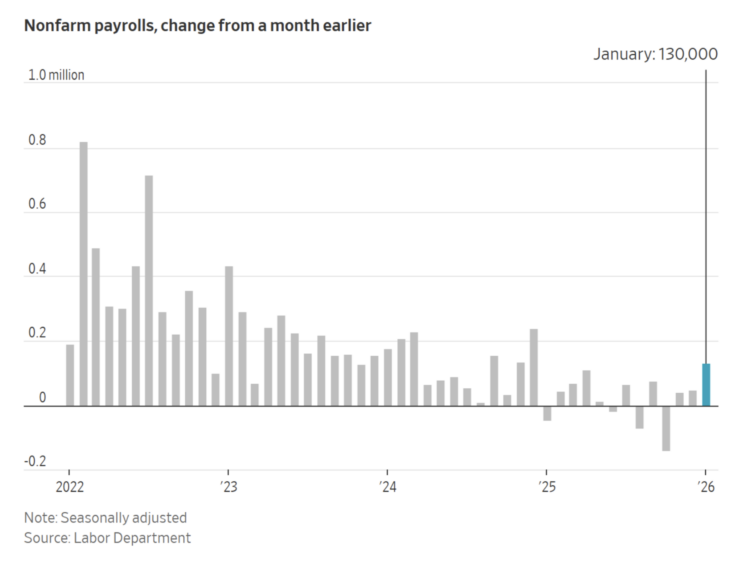
Good news on the surface with the January jobs report. The numbers were up, which is encouraging. Manufacturing in the U.S. added jobs to the sector for the first time since November 2024. Hopefully, it’s a positive trend.
However, digging into it, our sector still remains down. As reported by the WSJ, “Employment in the transportation and warehousing sector slipped 0.2% from December, and was 1.8% lower than a year earlier.”
So, in summary, the good news is that new jobs surpassed analysts’ expectations, national unemployment ticked down a notch from 4.4% to 4.3%, and the median duration of unemployment fell to 11.1 weeks, down from 11.4 weeks in December 2025.
Not to linger on the somewhat dour and mixed results news, however, housing numbers for January gave back all the good momentum that had building in the final months of 2025.
It seems like a combination of cold weather, snowstorms, and low consumer confidence has eroded the signs of recovery in that market. Falling mortgage rates were spurring activity, but high home prices, combined with ongoing worries about the job market for white-collar workers, put the brakes on any additional gains.
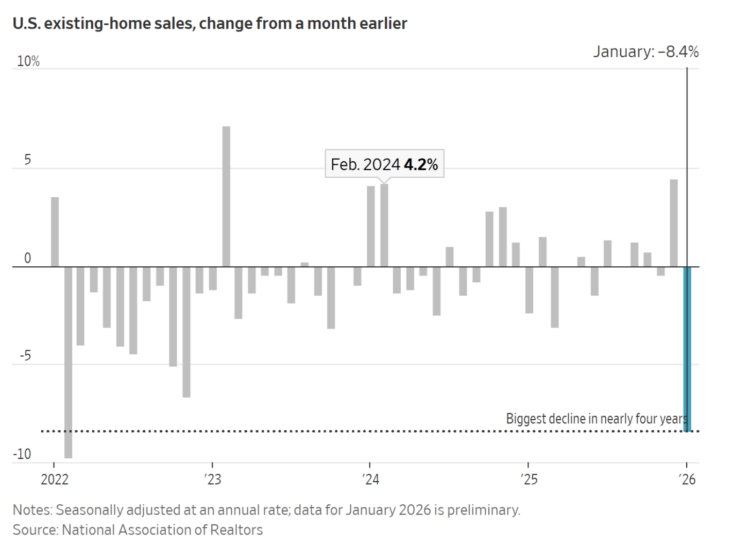
The WSJ reported, “The decline came after sales rose three of the previous four months. Economists surveyed by The Wall Street Journal had forecast a smaller 4.6% decrease. Expensive home prices and a decrease in inventory also played a role in the sharp deceleration of sales.”
A transportation development that’s been anticipated is now official. The FMCSA (Federal Motor Carrier Safety Administration) finalized the non-domiciled CDL rule. These regulations permanently tighten the eligibility criteria for H-2A, H-2B, and E-2 nonimmigrant visa holders. These changes will take effect 30 days after publication.
According to the FreightWaves article, “The industry expects a periodic attrition of approximately 40,000 drivers per year over the next five years as their credentials expire. While roughly 200,000 drivers remain impacted, only 6,000 annually are expected to qualify.”
So what will this mean for the industry?
Well, the intent is to strengthen the integrity of the CDL issuance process. With that, the FMCSA believes road safety will improve. Ultimately, it will likely lead to a capacity reduction, which should finally help the transportation sector emerge from this years-long drought it’s been in.

I shared this incredible story with friends at dinner earlier this week. I just can’t get enough of it. I’m so impressed by this 13-year-old hero. Faced with any parent’s nightmare scenario of family survival, the mom and her three young children were drifting away from the west coast of Australia into the depths of the Indian Ocean. Her oldest, Austin, swam for over 4 hours in the open sea to get help for his family. The bravery and determination of this young man is remarkable. One of my favorite stories so far in 2026.
After swimming 2 and a half miles, he finally reached shore after dark. Austin needed to trek another mile and a quarter back to his family’s vacation spot to get emergency personnel to rescue his mom and two siblings, who by that time were about 9 miles offshore. All were found, and the family is reunited.
May we all have the strength of heart in any measure when faced with challenges in our own lives.
Remember to tell your someone this Valentine’s weekend that they are loved. It costs nothing to be kind.