U.S. Economic Landscape
Consumer Confidence Still Flags Negative
Consumer confidence is trending negatively. The Conference Board uses a more conservative survey approach to measure consumer sentiment, but regardless of your view, the data paints a stark picture of what happened in January. It fell sharply.
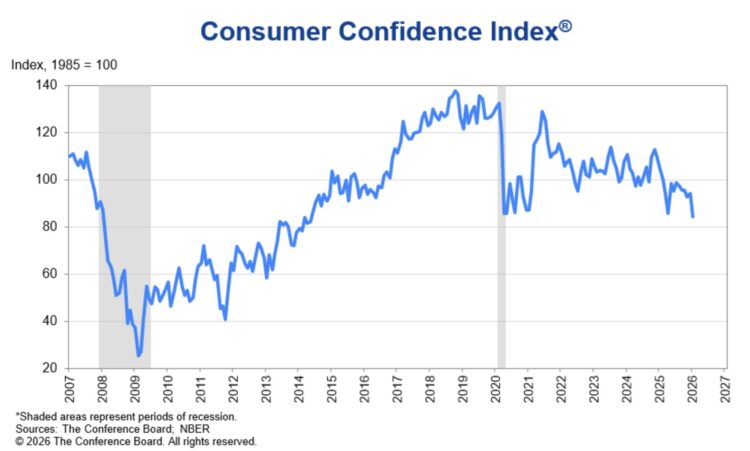
The top line index fell 9.7 points to 84.5 from 94.2 in December.
When asked about the January results, Dana Peterson, Chief Economist at the Confidence Board, stated:
Confidence collapsed in January, as consumer concerns about both the present situation and expectations for the future deepened, all five components of the Index deteriorated, driving the overall Index to its lowest level since May 2014 (82.2)—surpassing its COVID-19 pandemic depths.
Consumers’ write-in responses on factors affecting the economy continued to skew towards pessimism. References to prices and inflation, oil and gas prices, and food and grocery prices remained elevated. Mentions of tariffs and trade, politics, and the labor market also rose in January, and references to health/insurance and war edged higher.
Supply Chain News
Market uncertainty often causes turbulence in the logistics and supply chain industry. Shipping costs are rising in 2026. Some modes of transportation will see significant price hikes, while others will continue to rely on freight volume. The sector will experience some economic changes this year.
- Cost pressures related to transportation, especially the last mile, will keep rising. Rate and surcharge increases of 5-6% from companies like UPS and FedEx will impact businesses.
- Overcapacity in ocean shipping is expected to persist in 2026. However, any disruption to the current port and trucking environment could derail well-planned strategies and affect companies’ bottom lines.
- In the rail industry, intermodal activity is expected to increase as inventories are rebuilt and transportation modes shift. Additionally, all attention is on the potential Union Pacific-Norfolk Southern merger and how this major deal will affect customers, transit times, service, and labor. This is a situation where long-term planning is crucial for network optimization.
- Key market trends and regulatory changes, along with innovation, the increasing role of AI, cargo theft, M&A activity, and the influence of new federal rules restricting non-domiciled CDLs, will affect trucking. The industry is desperately seeking a rebound that hasn’t occurred since the post-pandemic boom.
Winter Storm Fern’s Economic Punch
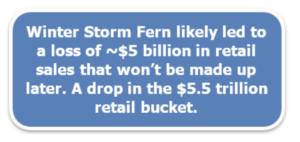
Early estimates suggest the winter storm’s total economic cost is in the tens of billions of dollars, with the most aggressive private estimate at $105–$115 billion. It could also reduce GDP by up to 1 percentage point in Q1, most of which should be temporary.
Much of that loss is expected to be partly offset in the upcoming months through catch-up spending and reconstruction efforts (home repairs, vehicle replacements, overtime work, deferred travel, and shopping). Therefore, the overall impact on annual real GDP growth is likely to be modest, even if the level loss and distributional effects (such as for small businesses and low-income households) are substantial.