
Producer Price Pressures Show What We Expected
All of us expected the Producer Price Index (PPI) to start to rise eventually, and that happened in August.
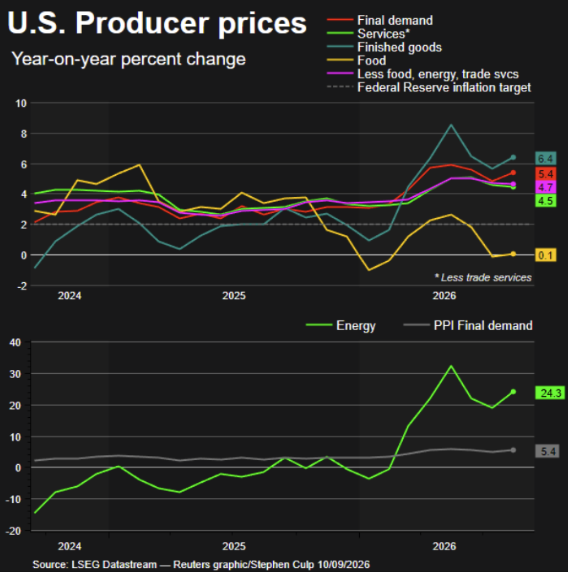
The PPI jumped 5.4% Y/Y (consensus expected 5.3%). With copper, steel, and many commodity prices surging (some hitting all-time highs, such as diesel, which impacts nearly every product moved in the country), it was only a matter of time before the wholesale side of the economy finally showed some headline inflation pressure.
Historically, supply-side shocks take time to translate into consumer-level price increases, and we may be reaching those levels now. Again, it is difficult to strip out how much of this is due to the Strait of Hormuz (and now the Red Sea situation) and how much is tied to demand-driven issues (like the surge in data center and power generation construction).
Public statements from Fed officials have been split. Chairman Kevin Warsh recently emphasized his commitment to returning inflation to target and said action may be needed.
Transportation Costs Still Surging
Systemic problems include early retirements among truck drivers, Yellow’s exit in 2023, and the departure of a portion of the 22,000 drivers at that time from the industry, deportations, CDL revocations, competition for CDL drivers from higher-wage nonresidential construction and data center projects, and company closures (which occur when diesel prices reach certain levels).
DAT Trendlines shows that load demand on the spot market was 35.3% higher Y/Y through the end of August. But truckload capacity was down 25.8% from last year. The difference between the two came in 78% higher year-over-year – meaning there were 78% more loads looking for every available truck than at this time last year.
As a result, spot truckload prices are up 42.4%. In addition, fuel surcharge rates are up 59.2% year over year. Together, these increases are putting significant pressure on overall trucking rates.
Read more about how this, along with financial developments and other global issues, could affect your supply chain.